


What Is a Refrigerated Compressed Air Dryer? Working, Types, Benefits & Applications
- Aug 5
- 9 min read

Compressed air is widely used in manufacturing, automotive, pharmaceutical, food processing, engineering, packaging, textile, and many other industries. However, compressed air naturally contains moisture. When this moisture is not removed properly, it can cause corrosion, contamination, equipment damage, pressure losses, and poor production quality.
A Refrigerated Compressed Air Dryer is one of the most commonly used solutions for removing moisture from compressed air. It cools compressed air to reduce its temperature and condense water vapour, which can then be separated and drained from the system.
For industries that depend on reliable compressed air, choosing the right drying technology is essential. In this guide, we will explain how refrigerated air dryers work, their types, benefits, applications, maintenance requirements, and factors to consider before purchasing one.
What Is a Refrigerated Compressed Air Dryer?
A refrigerated compressed air dryer is an air-treatment device designed to reduce moisture from compressed air by cooling the air below its dew point. As the compressed air temperature decreases, water vapour changes into liquid condensate. The condensate is then separated and removed through a drainage system.
Unlike untreated compressed air, properly dried air helps protect pneumatic tools, production equipment, pipelines, valves, and other components from moisture-related problems.
A typical refrigerated dryer consists of a refrigeration circuit, heat exchangers, moisture separator, refrigerant compressor, condenser, expansion device, and automatic drain system.
The primary purpose of the dryer is not to remove every trace of moisture but to achieve a suitable pressure dew point for general industrial applications.
Why Is Compressed Air Drying Important?
Atmospheric air contains moisture. When air is compressed, the concentration of moisture increases. As the compressed air cools inside pipelines and storage tanks, this moisture can condense into liquid water.
If the condensate remains inside the compressed air network, it can create several problems, including:
Corrosion inside air pipelines
Damage to pneumatic components
Contamination of finished products
Blockage of filters and valves
Reduced efficiency of pneumatic tools
Increased maintenance requirements
Poor air quality
Shorter equipment life
Production interruptions
Using an appropriate Compressed Air Dryer helps control these risks and provides cleaner, drier air throughout the compressed air system.
How Does a Refrigerated Compressed Air Dryer Work?
The working principle of a refrigerated dryer is based on cooling and condensation. The process can be understood in several stages.
1. Hot Compressed Air Enters the Dryer
Compressed air leaving an air compressor is generally hot and contains moisture. This hot compressed air enters the dryer through the inlet connection.
The initial air temperature can be significantly higher than the desired outlet temperature, depending on the compressor and operating conditions.
2. Air-to-Air Heat Exchange
The incoming hot compressed air first passes through a heat exchanger. Here, it exchanges heat with the cold outgoing air.
This process pre-cools the incoming air while recovering some of the cooling energy from the outgoing dry air. It also helps improve the overall energy efficiency of the system.
3. Refrigeration Cooling
The pre-cooled compressed air then enters the refrigerated heat exchanger, where a refrigeration circuit lowers its temperature.
As the air temperature falls, its ability to hold water vapour decreases.
4. Moisture Condensation
When the compressed air reaches the required dew point, water vapour condenses into liquid water.
The condensed moisture is separated from the compressed air through a moisture separator.
5. Automatic Condensate Drainage
The collected condensate is removed from the dryer through an automatic drain. Modern systems may use zero-loss drains or electronically controlled drains to reduce unnecessary compressed-air losses.
6. Dry Air Leaves the Dryer
The dried compressed air is reheated through the air-to-air heat exchanger before leaving the dryer.
This helps reduce the possibility of external condensation on downstream pipelines and provides stable compressed air for industrial applications.
Types of Refrigerated Compressed Air Dryers
Refrigerated dryers are generally available in different configurations depending on the cooling method and operating requirements.
1. Non-Cycling Refrigerated Dryer
A non-cycling dryer operates its refrigeration compressor continuously while the dryer is running.
It is relatively simple and can be suitable for applications where compressed air demand remains reasonably consistent.
Advantages include:
Simple operation
Reliable performance
Lower initial complexity
Suitable for steady air demand
However, continuous refrigeration operation can result in higher energy consumption when the compressed air load changes significantly.
2. Cycling Refrigerated Dryer
A cycling dryer can adjust its refrigeration operation according to the compressed air load.
When the demand decreases, the refrigeration system can reduce its operation, helping save energy.
This type can be particularly useful for facilities where compressed air consumption varies throughout the day.
3. Variable-Speed Refrigerated Dryer
Some modern systems use variable-speed technology to adjust refrigeration capacity according to operating conditions.
This can improve energy efficiency under changing loads and may be suitable for facilities with significant variations in compressed air consumption.
Key Benefits of a Refrigerated Air Dryer
Selecting the right air dryer can improve both equipment reliability and overall compressed air system performance.
Improved Air Quality
A refrigerated dryer removes a significant amount of liquid moisture from compressed air. This results in cleaner air for general industrial applications.
Protection Against Corrosion
Moisture can cause corrosion inside compressed air pipelines and storage equipment. Removing condensate helps protect the air distribution network.
Longer Equipment Life
Dry compressed air reduces moisture exposure to pneumatic tools, valves, cylinders, filters, and other components, helping improve their service life.
Reduced Maintenance
Moisture-related problems can increase maintenance requirements. A properly sized dryer can reduce condensate-related issues and help maintain consistent equipment performance.
Better Production Quality
In industries where moisture can affect the manufacturing process, dry compressed air can help maintain product quality and process consistency.
Improved Pneumatic Performance
Pneumatic equipment generally performs more reliably when supplied with clean and appropriately dried compressed air.
Cost-Effective Solution
For many general industrial applications, refrigerated dryers offer a practical balance between drying performance, operating cost, and equipment investment.
Applications of Refrigerated Compressed Air Dryers
Refrigerated dryers are widely used across industries where general-purpose dry compressed air is required.
Automotive Industry
Automotive manufacturing facilities use compressed air for pneumatic tools, assembly equipment, painting processes, cleaning, and automation.
Moisture control helps protect pneumatic components and maintain consistent operations.
Manufacturing Plants
General manufacturing facilities use compressed air for machinery, automation, pneumatic tools, material handling, and production equipment.
A suitable dryer helps prevent moisture from entering downstream equipment.
Pharmaceutical Industry
Pharmaceutical manufacturing requires carefully controlled environmental and process conditions. Depending on the application, specific air-quality requirements may require advanced drying and filtration technologies.
Food and Beverage Industry
Compressed air may come into contact with production equipment or products in food-processing environments. The appropriate air-treatment configuration should be selected according to the required air-quality standard.
Textile Industry
Textile machinery frequently uses compressed air for automation, cleaning, control systems, and production processes. Dry air helps reduce moisture-related operational issues.
Packaging Industry
Packaging machinery relies heavily on pneumatic cylinders, valves, and automated systems. Moisture-free compressed air helps maintain reliable operation.
Engineering and Fabrication
Workshops and engineering plants commonly use compressed air for pneumatic tools, machinery, cleaning, and fabrication processes.
Refrigerated Dryer vs Desiccant Air Dryer
Both refrigerated and desiccant dryers are used to remove moisture from compressed air, but they are designed for different drying requirements.
A refrigerated dryer typically provides a pressure dew point suitable for many general industrial applications. It is generally easier to operate and maintain and can have lower operating costs.
A desiccant dryer can achieve much lower pressure dew points and is therefore used where extremely dry compressed air is necessary.
Refrigerated Dryer
Suitable for general industrial applications
Uses refrigeration technology
Relatively simple operation
Lower pressure dew point requirements
Generally lower maintenance requirements
Suitable for many manufacturing environments
Desiccant Dryer
Suitable for applications requiring very dry air
Uses adsorption material
Can achieve very low pressure dew points
Suitable for sensitive processes
May require more maintenance and energy management
The correct choice depends on the required pressure dew point, operating conditions, industry, and air-quality requirements.
How to Choose the Right Air Dryer Machine?
Choosing an Air Dryer Machine should not be based only on compressor capacity. Several operating parameters should be considered.
1. Air Flow Rate
The dryer should be capable of handling the required compressed air flow. Undersizing can result in poor moisture removal and excessive pressure drop.
2. Inlet Air Temperature
High inlet temperatures can affect dryer performance. Check the manufacturer's specified operating range before selection.
3. Working Pressure
The dryer must be compatible with the operating pressure of the compressed air system.
4. Required Pressure Dew Point
Determine the required pressure dew point based on the application. General industrial applications may have different requirements from pharmaceutical, laboratory, or specialized manufacturing processes.
5. Ambient Temperature
The surrounding temperature can influence refrigeration performance, particularly in hot industrial environments.
6. Energy Efficiency
Consider power consumption, refrigeration technology, heat exchanger design, and control systems when comparing different models.
7. Drain System
An efficient condensate drain is important. Zero-loss drains can help prevent unnecessary compressed-air wastage.
Installation Considerations
Correct installation is essential for reliable dryer operation.
The dryer should be installed in a clean and adequately ventilated area. Adequate clearance should be provided around the equipment for airflow, inspection, and maintenance.
The compressed air system may also require suitable filtration before and after the dryer, depending on the application.
Important installation considerations include:
Correct inlet and outlet connections
Proper condensate drainage
Adequate ventilation
Appropriate piping size
Suitable pre-filtration
Easy access for maintenance
Protection from excessive ambient heat
Correct electrical supply
Following the manufacturer's installation guidelines can help prevent performance problems.
Maintenance Tips for Refrigerated Air Dryers
Routine maintenance helps maintain dryer efficiency and reliability.
Clean the Condenser
Dust and dirt accumulation on the condenser can reduce heat transfer and increase refrigeration system workload. Regular cleaning is particularly important in dusty industrial environments.
Inspect the Drain
Check the automatic drain regularly to ensure that condensate is being removed correctly.
Check Filters
Blocked filters can increase pressure drop and reduce compressed air system efficiency.
Monitor Pressure Dew Point
Monitoring the dew point can help identify potential dryer performance problems before they affect production.
Check Refrigeration Components
Qualified technicians should inspect refrigeration components according to the manufacturer's maintenance schedule.
Inspect Electrical Connections
Loose or damaged electrical connections can affect equipment safety and performance.
Common Problems Caused by Improper Dryer Selection
An incorrectly selected dryer may not provide the expected performance.
A dryer that is too small may experience excessive loading and poor moisture removal. A dryer that is too large may increase unnecessary equipment and operating costs.
Other common problems include:
Excessive pressure drop
High energy consumption
Frequent condensate issues
Poor dew point performance
Refrigeration overload
Drain failure
Insufficient airflow
Reduced system efficiency
Proper sizing based on actual operating conditions is therefore important.
Role of Air Compressors and Air Treatment Equipment
An air dryer is only one component of a complete compressed air system. The compressor generates compressed air, while filters, dryers, receivers, drains, and distribution pipelines work together to deliver usable air.
An Air Compressor Dealer can help businesses evaluate compressor capacity, dryer requirements, filtration, storage, and other air-treatment components.
For a complete system, it is important to consider the relationship between:
Air compressor
Air receiver tank
Compressed air filters
Refrigerated dryer
Automatic drain
Air distribution pipeline
Pneumatic equipment
Selecting compatible equipment can improve system reliability and reduce avoidable operating costs.
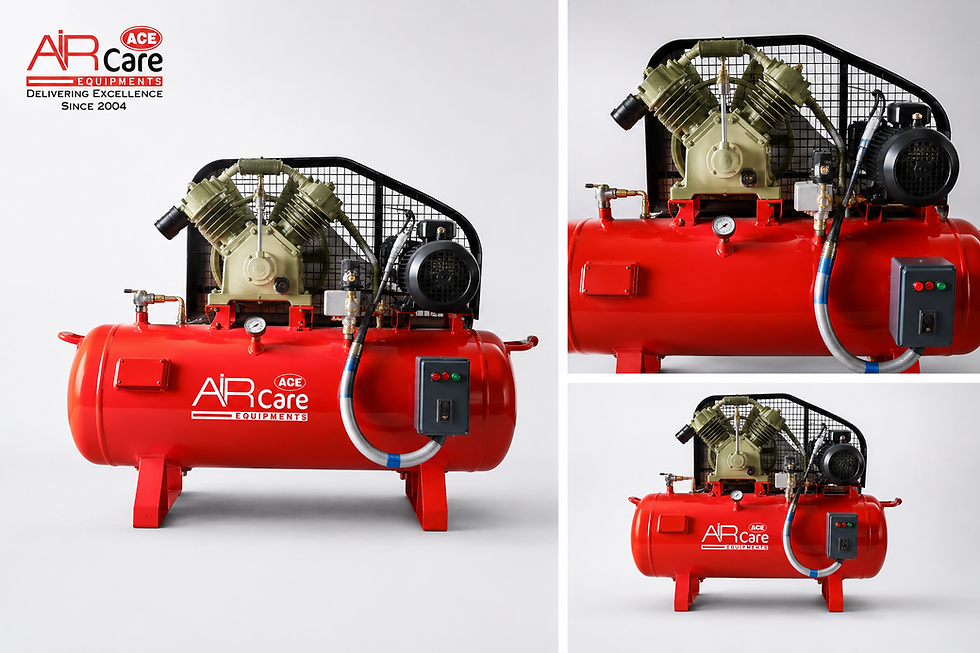
Why Air Care Equipment for Compressed Air Solutions?
Air Care Equipment provides compressed air and industrial air-treatment solutions for businesses requiring reliable equipment and professional support.
When selecting a refrigerated dryer, customers should consider more than the initial purchase price. Equipment quality, correct sizing, energy efficiency, service availability, spare parts, and technical assistance can all influence long-term performance.
Air Care Equipment can assist businesses in evaluating their compressed air requirements and selecting suitable air-treatment solutions based on application and operating conditions.
The company can also support customers looking for related industrial equipment, including compressors, air dryers, filtration systems, and other compressed air accessories.
What About a Servo Controlled Voltage Stabilizer?
Industrial compressed air equipment depends on a reliable electrical supply. Voltage fluctuations can affect motors, refrigeration systems, control panels, and other electrical components.
A Servo Controlled Voltage Stabilizer can be considered where electrical voltage variation is a concern. It continuously monitors the incoming voltage and adjusts the output to maintain a more stable supply for connected equipment.
For facilities using compressors and refrigerated dryers, electrical protection should be evaluated alongside compressed air requirements.
However, stabilizer selection should be based on the connected load, voltage range, phase configuration, and specific electrical requirements of the facility.
Frequently Asked Questions
What is a refrigerated compressed air dryer?
A refrigerated compressed air dryer removes moisture from compressed air by cooling the air until water vapour condenses. The resulting liquid condensate is separated and drained from the system.
What pressure dew point does a refrigerated dryer provide?
The pressure dew point depends on the dryer design, operating conditions, inlet temperature, pressure, and manufacturer specifications. Many refrigerated dryers are designed for general industrial applications rather than extremely low dew point requirements.
Is a refrigerated dryer better than a desiccant dryer?
Neither technology is universally better. Refrigerated dryers are generally suitable for general-purpose applications, while desiccant dryers are preferred when very low pressure dew points are required.
How often should an air dryer be maintained?
Maintenance frequency depends on the manufacturer's recommendations, operating environment, usage, and equipment design. Condenser cleaning, drain inspection, filter checks, and performance monitoring should be performed regularly.
How do I select the right dryer for my compressor?
Consider compressor flow rate, operating pressure, inlet temperature, ambient temperature, required dew point, air quality, and future expansion requirements. Professional sizing assistance can help avoid selecting an undersized or unnecessarily oversized dryer.
Final Thoughts
A Refrigerated Compressed Air Dryer is an important part of many industrial compressed air systems. By cooling compressed air and removing condensed moisture, it helps protect pipelines, pneumatic equipment, production machinery, and downstream processes.
The right dryer should be selected according to airflow, pressure, inlet temperature, ambient conditions, required pressure dew point, application, and energy-efficiency requirements.
For businesses planning a complete compressed air installation, it is equally important to evaluate the compressor, air receiver, filters, dryer, drainage system, electrical supply, and distribution network as one integrated system.
Working with an experienced Air Compressor Dealer can make equipment selection easier and help ensure that the complete system is correctly sized for current and future requirements. Air Care Equipment can provide guidance on compressed air and air-treatment solutions designed around industrial operating needs.


Comments