


Top 10 Air Compressor Manufacturers in Delhi NCR: 2026 Buying Guide
- Aug 12
- 8 min read

Choosing the right Air Compressor Manufacturers in Delhi NCR is important for businesses that depend on a reliable supply of compressed air. From manufacturing and automotive plants to pharmaceutical, packaging, textile, food-processing, and engineering industries, compressed air is used for numerous production and automation processes.
Delhi NCR has a strong industrial ecosystem, with businesses in Delhi, Gurgaon, Noida, Faridabad, Ghaziabad, Manesar, and nearby areas. This makes it easier to find manufacturers and suppliers offering different types of compressors, air-treatment systems, spare parts, and maintenance services.
In this guide, we will discuss the leading options to consider, different compressor types, important compressor parts name, the role of a Compressed Air Dryer, and how to select the right Industrial Air Compressor for your business.
What Is an Industrial Air Compressor?
An industrial air compressor is a machine that takes atmospheric air, compresses it, and stores or delivers it at a higher pressure. The compressed air can then be used to operate pneumatic tools, machinery, automation systems, production equipment, and other industrial applications.
Industrial compressors are available in different technologies and capacities. The correct choice depends on factors such as:
Required air pressure
Required air flow
Operating hours
Application type
Installation environment
Air quality requirements
Energy consumption
Maintenance requirements
A professional manufacturer can help determine the appropriate compressor capacity and configuration for a particular application.
Top 10 Air Compressor Manufacturers in Delhi NCR
When comparing Air Compressor Manufacturers in Delhi NCR, businesses should consider product quality, technical expertise, service support, spare-parts availability, efficiency, and application suitability.
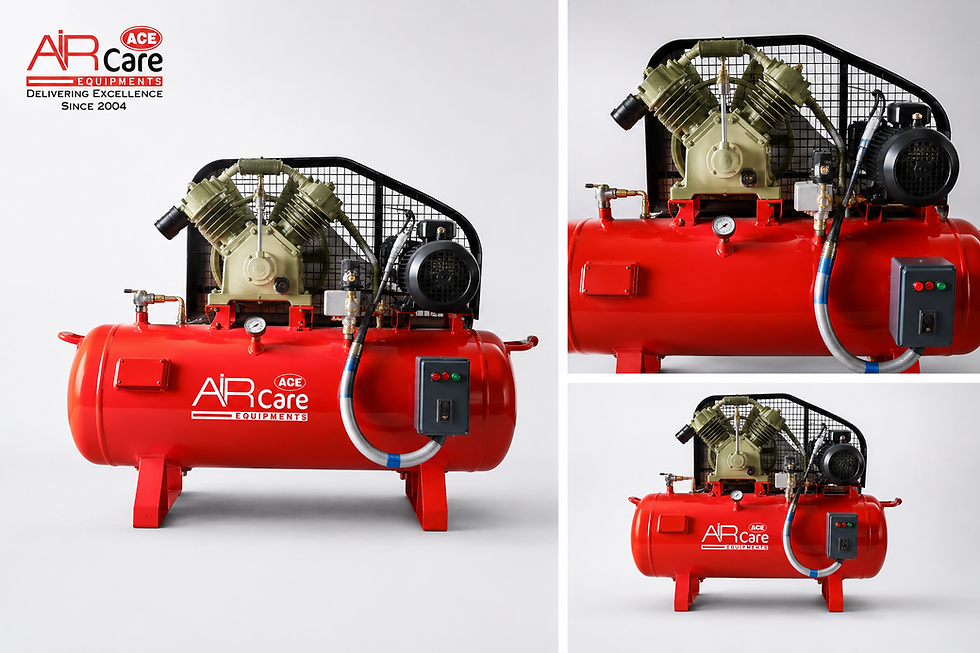
1. Air Care Equipment
Air Care Equipment provides industrial compressed-air and related equipment for different industrial applications. Its product range includes industrial air compressors, air dryers, vacuum pumps, pressure vessels, and other compressed-air solutions.
For businesses looking for an Industrial Air Compressor, Air Care Equipment can be considered based on specific pressure, capacity, application, and installation requirements. Local technical and service support can also be an important consideration for buyers in Delhi NCR.
2. Atlas Copco
Atlas Copco is a recognized industrial equipment manufacturer offering compressed-air solutions for manufacturing, automotive, pharmaceutical, food processing, and other industries.
Its portfolio includes rotary screw and oil-free compressor technologies along with air-treatment solutions.
3. ELGi
ELGi provides compressed-air solutions for industrial applications. Its portfolio includes rotary screw and reciprocating compressors designed for different air-flow and pressure requirements.
4. Ingersoll Rand
Ingersoll Rand offers compressed-air equipment for industrial and commercial applications. Its portfolio includes various compressor technologies and supporting systems.
5. Kaeser
Kaeser provides industrial compressed-air systems, including screw compressors, air treatment equipment, controllers, and related products.
6. Kirloskar Pneumatic
Kirloskar Pneumatic is an established Indian industrial equipment company with solutions for compressed air and other industrial applications.
7. Chicago Pneumatic
Chicago Pneumatic offers compressors and compressed-air equipment for industrial and professional applications.
8. CompAir
CompAir provides compressed-air technologies, including oil-lubricated and oil-free compressor solutions for various industrial requirements.
9. Sullair
Sullair offers industrial compressor systems designed for applications requiring dependable compressed air and continuous operation.
10. Gardner Denver
Gardner Denver provides industrial compressed-air and vacuum technologies for various industrial sectors.
Note: This list is a buyer-oriented shortlist, not a definitive ranking. Product availability, local dealerships, models, pricing, and service coverage can change, so buyers should verify current information before making a purchase.
Types of Air Compressors
Before choosing between Air Compressor Manufacturers, it is important to understand the major compressor technologies available.
1. Screw Compressor
A screw compressor uses rotating screw elements to compress air continuously. Rotary screw compressors are widely used in manufacturing facilities because they can provide a steady supply of compressed air.
They are commonly used in:
Automotive manufacturing
Engineering industries
Packaging
Textile plants
Pharmaceutical manufacturing
Food processing
General manufacturing
Screw compressors are particularly useful where compressed air is required for long operating periods.
2. Reciprocating Air Compressor
A reciprocating air compressor uses pistons and cylinders to compress air. These compressors can be suitable for applications requiring lower air volumes or intermittent operation.
Typical applications include workshops, garages, small manufacturing units, pneumatic tools, and service facilities.
3. Oil-Free Air Compressor
Oil-Free Air Compressor are designed for applications where oil contamination in compressed air must be minimized.
They may be used in industries such as:
Pharmaceuticals
Food and beverage
Electronics
Healthcare
Specialized manufacturing
The exact compressor and air-treatment configuration should be selected according to the required air-quality standard.
4. Centrifugal Compressor
Centrifugal compressors use rotating impellers to generate compressed air and are generally suited to large industrial installations requiring high air volumes.
What Is a Compressed Air Dryer?
A Compressed Air Dryer is an important part of many compressed-air systems. When atmospheric air is compressed, moisture present in the air can condense within the system.
If moisture is not properly removed, it can cause:
Pipe corrosion
Pneumatic equipment damage
Product contamination
Poor air quality
Increased maintenance
Production problems
A suitable dryer removes moisture and helps provide cleaner, drier compressed air to downstream equipment.
Types of Compressed Air Dryers
Refrigerated Compressed Air Dryer
Refrigerated Compressed Air Dryer cool compressed air to condense and remove moisture. They are widely used for general industrial applications.
Desiccant Air Dryer
Desiccant dryers use moisture-absorbing material to achieve a lower pressure dew point. They are appropriate for applications requiring very dry compressed air.
Membrane Air Dryer
Membrane dryers use specialized membranes to remove water vapor and can be useful where compact air-treatment equipment is required.
The right dryer should be selected according to air flow, pressure, ambient conditions, required dew point, and application requirements.
Compressor Parts Name You Should Know
Understanding common compressor parts name terminology is useful when purchasing equipment or discussing maintenance with a service provider.
Some commonly used components include:
Air Filter
The air filter removes contaminants from incoming atmospheric air before it enters the compression system.
Oil Filter
In oil-lubricated compressors, the oil filter helps remove contaminants from the lubrication system.
Air/Oil Separator
In oil-injected screw compressors, the air/oil separator separates oil from compressed air before the air leaves the compressor.
Compressor Element
The compressor element is the main component responsible for compressing air.
Motor
The motor provides the mechanical power required to operate the compressor.
Intake Valve
The intake valve controls air entering the compressor.
Cooling Fan
The cooling fan helps dissipate heat generated during compression.
Pressure Gauge
A pressure gauge allows operators to monitor system pressure.
Safety Valve
A safety valve provides pressure protection when system pressure exceeds a predetermined limit.
Receiver Tank
An air receiver stores compressed air and helps stabilize pressure fluctuations within the system.
Applications of Industrial Air Compressors
An Industrial Air Compressor can be used across many sectors.
Automotive Industry
Compressed air can power pneumatic tools, assembly systems, painting equipment, and automation machinery.
Pharmaceutical Industry
Pharmaceutical applications may require oil-free compressors and advanced air-treatment systems where compressed-air purity is critical.
Food Processing
Compressed air can support packaging, automation, cleaning, and other production processes.
Textile Industry
Compressed air is used for pneumatic machinery, automation, cleaning, and production processes.
Packaging Industry
Pneumatic actuators, automated packaging machines, and control systems often require compressed air.
Construction
Compressors can operate pneumatic tools and other equipment used at construction sites.
Engineering and Manufacturing
Manufacturing facilities use compressed air for pneumatic tools, automation, material handling, cleaning, and production equipment.
How to Choose the Best Air Compressor Manufacturer in Delhi NCR
Choosing a manufacturer should not be based only on the purchase price. Consider the complete operating requirements of your facility.
1. Calculate Air Demand
Determine the total air consumption of your equipment. Check the required CFM or m³/min before selecting compressor capacity.
An undersized compressor may struggle to maintain pressure, while an unnecessarily oversized compressor can increase energy costs.
2. Identify Required Pressure
Check the operating pressure requirements of your pneumatic equipment. Select a compressor that can reliably meet the required pressure without unnecessary over-sizing.
3. Consider Operating Hours
If your facility operates continuously, a screw compressor may be more appropriate than equipment designed primarily for intermittent operation.
4. Evaluate Energy Efficiency
Electricity can represent a major part of an air compressor's lifetime operating cost. Compare motor efficiency, control technology, air output, and expected energy consumption.
5. Check Air Quality
Determine whether your application requires standard compressed air, clean air, or oil-free air. Select appropriate filters and a Compressed Air Dryer when necessary.
6. Consider Maintenance
Ask the manufacturer about recommended service intervals, consumable parts, maintenance procedures, and service availability.
7. Check Spare Parts Availability
Easy access to genuine spare parts can reduce downtime and simplify maintenance.
8. Evaluate After-Sales Support
Before purchasing, check whether the manufacturer or supplier provides:
Installation
Commissioning
Preventive maintenance
Breakdown support
Spare parts
Technical assistance
Warranty
AMC services
Why Energy Efficiency Matters
Compressed-air systems can consume significant amounts of electricity, particularly when compressors operate for long hours.
Several factors influence energy consumption:
Compressor technology
Motor efficiency
Air pressure
Leakage
Operating load
Control system
Maintenance condition
Air demand fluctuations
Regular maintenance and leak detection can help reduce unnecessary energy losses.
Variable-speed-drive compressors can also be useful in applications where air demand changes throughout the production cycle.
However, the appropriate technology depends on the actual operating profile of the facility.
Complete Compressed-Air System
An efficient compressed-air installation may include more than just a compressor.
A typical arrangement can be:
Air Compressor → Aftercooler → Air Receiver → Filters → Compressed Air Dryer → Production Equipment
Each component performs a specific function.
The compressor generates compressed air, the aftercooler helps reduce temperature, the receiver stores compressed air, filters remove contaminants, and the dryer removes moisture.
The exact configuration should be determined based on the required pressure, flow, air quality, and application.
Common Mistakes When Buying an Air Compressor
Businesses can avoid several common mistakes by evaluating their requirements before purchasing.
Choosing Only by Price
The cheapest compressor may not provide the lowest lifetime cost. Energy consumption, maintenance, and downtime should also be considered.
Buying an Incorrect Capacity
An incorrectly sized compressor can cause pressure problems or unnecessary energy consumption.
Ignoring Air Treatment
Moisture and contaminants can damage pneumatic equipment. Consider appropriate filtration and a Compressed Air Dryer where required.
Not Checking Service Support
A compressor is a long-term industrial investment. Reliable technical support and spare-parts availability are important.
Ignoring Air Leakage
Compressed-air leaks can waste energy and reduce system efficiency. Regular leak inspections should be part of maintenance.|
Questions to Ask Air Compressor Manufacturers
Before placing an order, ask the manufacturer or supplier:
What compressor capacity is suitable for my application?
What pressure and air flow will the compressor provide?
Is the model suitable for continuous operation?
What is the expected energy consumption?
Do I need a Compressed Air Dryer?
Which filtration system is recommended?
What spare parts are commonly required?
What is the recommended maintenance schedule?
What warranty is included?
Is installation and commissioning available?
What after-sales support is provided in Delhi NCR?
Are AMC and breakdown services available?
Why Choose Air Care Equipment?
Air Care Equipment focuses on industrial compressed-air and related equipment. Its range includes industrial air compressors, compressed-air dryers, vacuum pumps, pressure vessels, and other industrial solutions.
For businesses in Delhi NCR, selecting a supplier with appropriate technical knowledge, equipment options, service support, and spare-parts availability can make compressor ownership easier over the long term.
Before purchasing, businesses should discuss their actual air demand, operating pressure, working hours, installation environment, and air-quality requirements with the supplier.
Final Buying Checklist
Before selecting one of the Air Compressor Manufacturers in Delhi NCR, make sure you have evaluated:
Required air flow
Operating pressure
Compressor technology
Working hours
Energy efficiency
Air quality
Compressed Air Dryer requirement
Filtration requirements
Receiver capacity
Maintenance cost
Spare-parts availability
Warranty
Installation
After-sales service
Total cost of ownership
Conclusion
Finding the right Air Compressor Manufacturers in Delhi NCR requires careful consideration of both equipment specifications and long-term support. A suitable Industrial Air Compressor should provide the required pressure and air flow while maintaining efficient and reliable operation.
Screw compressors are commonly preferred for continuous industrial applications, while reciprocating compressors can be suitable for intermittent requirements. Depending on the application, a Compressed Air Dryer, filters, receiver tank, and other air-treatment equipment may also be required.
Air Care Equipment is one option businesses can consider when evaluating industrial compressed-air solutions. Ultimately, the best manufacturer depends on your application's requirements, budget, operating conditions, service expectations, and long-term cost of ownership.


Comments