


Best Reciprocating Piston Compressor for Industrial Applications
- May 27
- 6 min read

Industrial operations rely heavily on efficient compressed air systems for powering machinery, tools, and production lines. Choosing the Best Reciprocating Piston Compressor can significantly improve productivity, reduce downtime, and ensure long-term operational efficiency. Whether you operate in manufacturing, automotive workshops, pharmaceuticals, food processing, or heavy engineering industries, a high-performance compressor is essential for uninterrupted operations.
Among the trusted names in the industry, Air Care Equipment offers durable and energy-efficient compressor solutions designed to meet diverse industrial requirements.
What is a Reciprocating Piston Compressor?
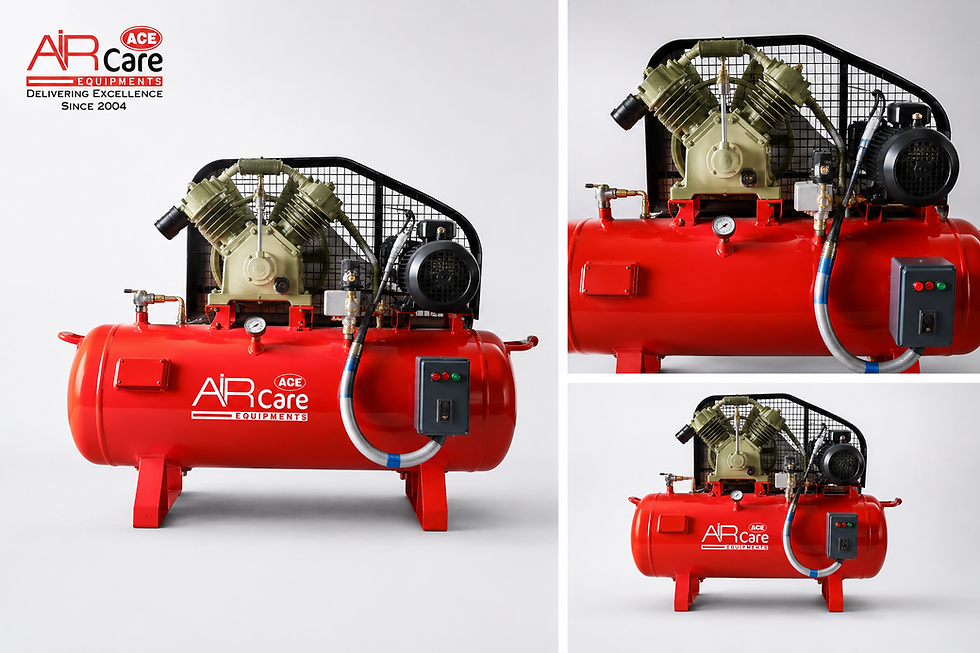
A Receiprocating Air Compressor is a positive displacement compressor that uses pistons driven by a crankshaft to compress air. The piston moves inside a cylinder, drawing in atmospheric air and compressing it to a higher pressure before storing it in a tank.
These compressors are widely used because of their:
High-pressure capability
Reliable performance
Cost-effectiveness
Long operational life
Easy maintenance
Industries requiring intermittent or continuous compressed air supply often prefer reciprocating compressors due to their durability and efficiency.
Why Industries Prefer the Best Reciprocating Piston Compressor
Selecting the right compressor is crucial for industrial productivity. The Best Reciprocating Piston Compressor delivers superior performance while maintaining energy efficiency.
1. High Efficiency
Reciprocating compressors are known for delivering compressed air at higher pressures with excellent efficiency. They are suitable for applications requiring precise and powerful airflow.
2. Durable Construction
Industrial compressors are built with robust components such as cast-iron cylinders, heavy-duty pistons, and durable crankshafts, ensuring long-lasting performance even in demanding environments.
3. Cost-Effective Solution
Compared with other compressor types, reciprocating compressors are more affordable for small and medium industrial operations while delivering excellent performance.
4. Easy Maintenance
The design of a Receiprocating Air Compressor allows easy access to internal components, making servicing and maintenance straightforward.
5. Versatile Applications
From automotive garages to large-scale manufacturing plants, reciprocating compressors support a wide range of industrial applications.
How a Reciprocating Air Compressor Works
Understanding the working mechanism helps industries choose the right compressor model.
The compressor operates in two stages:
Intake Stroke
The piston moves downward, creating a vacuum inside the cylinder. Atmospheric air enters through the intake valve.
Compression Stroke
The piston moves upward, compressing the air inside the cylinder. Once the desired pressure is reached, compressed air is discharged into the storage tank.
This process repeats continuously to maintain a steady supply of compressed air.
Types of Reciprocating Piston Compressors
Single-Stage Compressors
Single-stage compressors compress air in one stroke. They are ideal for low to medium-pressure applications.
Best For:
Small workshops
Automotive garages
DIY operations
Light industrial use
Two-Stage Compressors
Two-stage compressors compress air in two cylinders, producing higher pressure and better efficiency.
Best For:
Manufacturing units
Heavy industrial machinery
Continuous operations
High-pressure applications
Oil-Lubricated Compressors
These compressors use oil for lubrication, reducing wear and improving durability.
Oil-Free Compressors
Oil-free models provide clean compressed air and are commonly used in:
Pharmaceuticals
Food processing
Medical industries
Electronics manufacturing
Key Features of the Best Reciprocating Piston Compressor
When choosing the Best Reciprocating Piston Compressor, consider the following features:
Heavy-Duty Motor
A high-quality motor ensures stable performance under continuous industrial workloads.
Efficient Cooling System
Advanced cooling systems prevent overheating and improve compressor lifespan.
Low Noise Operation
Modern industrial compressors are designed with noise-reduction technology for a safer working environment.
Energy Efficiency
Energy-efficient compressors help industries reduce electricity consumption and operating costs.
Corrosion-Resistant Components
Durable materials improve compressor reliability in harsh industrial conditions.
High Air Delivery
Industrial applications require consistent compressed air output for uninterrupted productivity.
Applications of Industrial Air Compressors
An Industrial Air Compressor is used across multiple sectors due to its versatility and efficiency.
Manufacturing Industry
Compressed air powers:
Pneumatic tools
Assembly lines
Packaging machines
Automation systems
Automotive Industry
Automotive workshops use compressors for:
Spray painting
Tire inflation
Air tools
Vehicle maintenance
Construction Industry
Construction sites rely on compressed air for:
Jackhammers
Drilling equipment
Concrete spraying
Food and Beverage Industry
Oil-free compressors provide contamination-free compressed air for food packaging and processing.
Pharmaceutical Industry
Pharmaceutical companies require clean compressed air for sensitive production processes.
Textile Industry
Textile manufacturing uses compressed air in:
Spinning machines
Weaving operations
Cleaning systems
Why Choose Air Care Equipment?
When searching for reliable Air Compressor Manufacturers, quality and after-sales support are essential factors. Air Care Equipment is recognised for providing high-performance industrial compressors designed to meet modern industrial needs.
Advanced Engineering
Their compressors are manufactured using advanced technology and premium-grade materials for superior durability.
Customized Solutions
Different industries have unique requirements. Air Care Equipment offers customised compressor systems tailored to operational demands.
Energy-Efficient Systems
Their compressors are designed to optimise energy use, significantly reducing operational costs.
Reliable After-Sales Service
Strong customer support and maintenance services ensure uninterrupted industrial operations.
Wide Product Range
The company provides various compressor models suitable for small, medium, and large industrial applications.
Factors to Consider Before Buying a Reciprocating Air Compressor
Choosing the right compressor requires evaluating several important factors.
Air Pressure Requirement
Determine the required PSI (Pounds per Square Inch) based on your industrial application.
Airflow Capacity
CFM (Cubic Feet per Minute) indicates airflow output. Higher CFM is essential for operating multiple pneumatic tools simultaneously.
Tank Size
Larger tanks provide continuous airflow and reduce compressor cycling frequency.
Duty Cycle
Industrial applications requiring continuous operation need compressors with a high-duty cycle.
Power Source
Choose between electric-powered and diesel-powered compressors based on operational requirements.
Noise Level
Low-noise compressors are ideal for indoor industrial environments.
Maintenance Requirements
Easy-to-maintain compressors reduce downtime and maintenance costs.
Benefits of Using Industrial Air Compressors
Increased Productivity
Efficient compressed air systems improve workflow and operational speed.
Reduced Manual Labor
Pneumatic tools powered by compressors minimize physical effort and improve efficiency.
Improved Precision
Compressed air systems offer accurate control in manufacturing and automation processes.
Enhanced Safety
Air-powered tools reduce electrical hazards in industrial environments.
Long-Term Cost Savings
Energy-efficient compressors lower electricity bills and maintenance expenses.
Maintenance Tips for Reciprocating Piston Compressors
Proper maintenance improves compressor performance and extends operational life.
Check Oil Levels Regularly
Oil-lubricated compressors require regular oil inspection and replacement.
Clean Air Filters
Dirty filters reduce airflow and compressor efficiency.
Inspect Belts and Hoses
Worn belts and damaged hoses should be replaced immediately.
Drain Moisture from Tanks
Condensation buildup inside tanks can cause corrosion.
Monitor Operating Temperature
Overheating may indicate ventilation or lubrication issues.
Schedule Preventive Maintenance
Regular servicing ensures optimal compressor performance and reduces the risk of unexpected breakdowns.
Difference Between Reciprocating and Rotary Screw Compressors
Feature | Reciprocating Compressor | Rotary Screw Compressor |
Air Delivery | Intermittent | Continuous |
Pressure Capability | High | Moderate |
Maintenance | Easier | Complex |
Initial Cost | Lower | Higher |
Best For | Small to medium industries | Large-scale continuous operations |
For industries requiring high-pressure, cost-effective performance, the Best Reciprocating Piston Compressor remains an ideal choice.
Energy Efficiency in Industrial Air Compressors
Energy efficiency is becoming increasingly important in industrial operations. Modern compressors incorporate advanced technologies such as:
Variable speed drives
Efficient cooling systems
Reduced air leakage
Smart monitoring systems
These features help businesses reduce operational costs while improving productivity.
Common Problems in Reciprocating Air Compressors
Excessive Noise
Possible causes include loose components, worn bearings, or insufficient lubrication.
Overheating
Overheating may result from poor ventilation or dirty cooling fins.
Low Air Pressure
Air leaks, clogged filters, or valve damage can reduce pressure output.
Moisture Build-Up
Faulty drain valves or humid environments may increase moisture accumulation.
Routine inspection and maintenance help prevent these issues.
Future of Industrial Air Compressors
Industrial automation and smart manufacturing are driving innovations in compressor technology. Modern Industrial Air Compressor systems now include:
IoT-enabled monitoring
Energy-efficient motors
Smart pressure controls
Predictive maintenance systems
These advancements improve operational efficiency and reduce downtime.
Why Air Care Equipment Stands Out
Among leading Air Compressor Manufacturers, Air Care Equipment stands out for its commitment to quality, innovation, and customer satisfaction.
Their compressors are designed for:
High efficiency
Long service life
Reduced maintenance
Maximum industrial productivity
Industries looking for reliable compressed air solutions trust Air Care Equipment for consistent performance and professional support.
Conclusion
Choosing the Best Reciprocating Piston Compressor is essential for industries seeking reliable, efficient compressed-air solutions. From manufacturing plants to automotive workshops, reciprocating compressors offer exceptional performance, durability, and cost-effectiveness.
A high-quality Receiprocating Air Compressor improves productivity, reduces operational costs, and supports long-term industrial growth. By partnering with trusted Air Compressor Manufacturers like Air Care Equipment, businesses can ensure dependable performance and advanced compressor technology tailored to their industrial requirements.
Investing in the right Industrial Air Compressor not only enhances operational efficiency but also supports sustainable, energy-efficient industrial practices.


Comments