


Air Receiver Tank: How to Improve Compressed Air System Performance

Industrial equipment needs a reliable supply of compressed air to operate efficiently. However, air demand can change throughout the production cycle, creating pressure fluctuations and increasing the workload on the compressor. An Air Receiver Tank helps manage these fluctuations by storing compressed air and supplying it when needed.
For businesses planning a new compressed air system or upgrading existing equipment, understanding the role of an air receiver tank is essential. Air Care Equipment provides industrial compressed air solutions for different operational requirements.
Quick Answer: Why Is an Air Receiver Tank Needed?
An Air Receiver Tank stores compressed air and helps balance the difference between air supply and demand. It can reduce short-term pressure fluctuations, support efficient compressor control, and collect some condensate for removal. The correct tank capacity depends on compressor output, air consumption, operating pressure, and system requirements.
How Does an Air Receiver Tank Support Industrial Operations?
An air receiver tank acts as a storage buffer between the compressor and the compressed air distribution system.
When the compressor produces more air than the connected equipment immediately needs, the tank stores the excess air. When demand increases, the stored air helps supply the system.
This arrangement can provide several operational benefits:
Air storage: Provides a reserve of compressed air for short periods.
Pressure stability: Helps manage fluctuations caused by changing air demand.
Compressor control: Can reduce frequent loading and unloading in appropriately designed systems.
Condensate collection: Allows some moisture to condense for removal through a suitable drainage system.
System support: Helps maintain a more consistent compressed air supply when correctly sized.
An air receiver tank should be selected according to the actual requirements of the installation.
What Are the Different Types of Air Receiver Tanks?
Air receiver tanks are available in different configurations to suit industrial applications.
Vertical Air Receiver Tanks
Vertical tanks use floor space efficiently and may be suitable for facilities where the available installation area is limited.
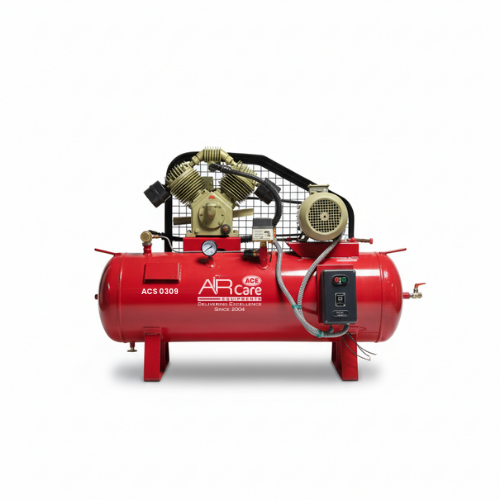
Horizontal Air Receiver Tanks
Horizontal tanks can suit installations where the layout provides sufficient floor space and the equipment arrangement supports their use.
Wet Air Receiver Tanks
A wet receiver is installed before the air dryer. It stores compressed air directly from the compressor and can collect some condensate as the air cools.
Dry Air Receiver Tanks
A dry receiver is installed downstream of the air treatment equipment. It stores treated compressed air for use by connected equipment.
The best configuration depends on the system design, available space, air demand, and required air quality.
How to Select the Right Air Receiver Tank Capacity
Choosing the right tank size helps balance system performance, installation costs, and operational needs.
Before selecting an Air Receiver Tank, evaluate these factors:
Factor | What to Consider |
Compressor output | Determine the volume of air supplied by the compressor |
Air consumption | Estimate the demand from connected machines and tools |
Pressure range | Establish the acceptable operating pressure range |
Demand variation | Identify sudden or intermittent air requirements |
Installation space | Check the available area and access requirements |
Air treatment | Determine whether the system needs dryers, filters, and condensate drains |
Safety requirements | Confirm the required pressure rating and applicable regulations |
Avoid choosing a tank based only on compressor horsepower. Consult the manufacturer's sizing guidance or a qualified compressed air system professional.
Why Is an Air Dryer Machine Important?
Compressed air can contain water vapour. As the air cools, some of this moisture can condense and collect in the system.
An Air Dryer Machine removes moisture from compressed air to help protect downstream equipment and meet process requirements.
Two common options are:
Refrigerated air dryers: These cool compressed air to condense moisture. They are widely used in general industrial applications where a moderate pressure dew point is sufficient.
Desiccant air dryers: These use moisture-absorbing material to achieve lower pressure dew points for applications with stricter drying requirements.
The appropriate dryer depends on airflow, operating pressure, inlet temperature, ambient conditions, and the required pressure dew point.
An air receiver tank and an air dryer perform different functions. A receiver stores air, while a dryer controls moisture. Both may be needed in a properly designed compressed air system.
Where Are Industrial Vacuum Pumps Used?
Industrial Vacuum Pumps serve a different purpose from air receiver tanks. Rather than storing compressed air for pneumatic equipment, vacuum pumps remove gas from a system to create or maintain a vacuum.
They are commonly used in applications such as:
Vacuum packaging
Industrial material handling
Manufacturing processes
Vacuum forming
Selected laboratory and processing applications
When choosing an industrial vacuum pump, consider the required vacuum level, pumping speed, operating conditions, and nature of the process.
Businesses may use both compressed air equipment and vacuum systems in the same facility, but the equipment must be selected for its specific application.
6. Choosing Air Compressor Manufacturers in Delhi NCR
Selecting the right supplier can help businesses find equipment that matches their operating requirements.
When comparing Air Compressor Manufacturers in Delhi NCR, consider more than the initial purchase price. Review the technical specifications, product suitability, documentation, maintenance support, and availability of replacement parts.
Use this checklist when evaluating suppliers:
Check compressor capacity and operating pressure.
Confirm compatibility with the receiver tank and air dryer.
Review energy consumption and expected operating costs.
Ask about installation and maintenance requirements.
Check product documentation and applicable safety compliance.
Confirm the availability of technical support.
A well-planned system should integrate the compressor, receiver tank, air treatment equipment, and distribution network according to the facility's actual air demand.
Air Receiver Tank Solutions From Air Care Equipment
Air Care Equipment provides industrial compressed air equipment and related solutions for different applications.
If you are planning a compressed air installation, start by identifying your air consumption, required pressure, operating schedule, and moisture-control needs.
Explore these related resources:
Air Receiver Tank Sizing Guide — learn about receiver functions, types, and sizing considerations.
Advantages and Disadvantages of an Air Receiver Tank — understand the main benefits and limitations.
Air Dryer Machine Solutions — explore compressed air drying equipment.
Air Care Equipment — learn more about the company's industrial equipment and services.
https://www.aircareequipment.co.in/air-dryerReview the product specifications and consult a qualified supplier before selecting equipment for your facility.
Frequently Asked Questions
1. What is the main function of an air receiver tank?
Its main function is to store compressed air and help balance supply and demand. It can also help reduce short-term pressure fluctuations in a properly designed system.
2. Does an air receiver tank eliminate the need for an air dryer machine?
No. A receiver tank can collect some condensed liquid water, but it does not remove all water vapour. An air dryer may be necessary when the application requires controlled moisture levels.
3. How do I determine the correct air receiver tank size?
Consider compressor output, air demand, operating pressure, pressure fluctuations, and system requirements. Follow the tank manufacturer's sizing recommendations and applicable engineering guidance.
4. What is the difference between an air compressor and an industrial vacuum pump?
An air compressor increases gas pressure to supply compressed air, while an industrial vacuum pump removes gas from a space to create or maintain a vacuum.
5. What should I check when choosing an industrial air compressor supplier?
Compare technical specifications, system compatibility, safety documentation, installation requirements, maintenance support, and replacement-part availability.
Conclusion
An Air Receiver Tank is an important part of an industrial compressed air system. It provides air storage, helps manage changes in demand, and supports pressure stability when correctly sized and installed.
Combining the tank with a suitable Air Dryer Machine can help control moisture and protect downstream equipment. Businesses evaluating Industrial Vacuum Pumps or comparing Air Compressor Manufacturers in Delhi NCR should also consider their specific applications, operating conditions, and maintenance requirements.
Air Care Equipment can be a starting point for exploring industrial compressed air solutions and identifying equipment suited to your facility.



Comments