


The Ultimate Guide to Choosing the Best Reciprocating Air Compressor

In modern industrial operations, compressed air plays a critical role in maintaining productivity and efficiency. A Reciprocating Air Compressor is one of the most widely used and trusted solutions for generating compressed air across industries. From small workshops to large manufacturing units, these compressors continue to deliver reliable performance under varying operational demands.
At Air Care Equipments, we help businesses choose air compressor systems that balance performance, durability, and cost efficiency. This guide explains everything you need to know about reciprocating air compressors, their working principle, applications, and how to select the right solution for your industry.
Understanding a Reciprocating Air Compressor
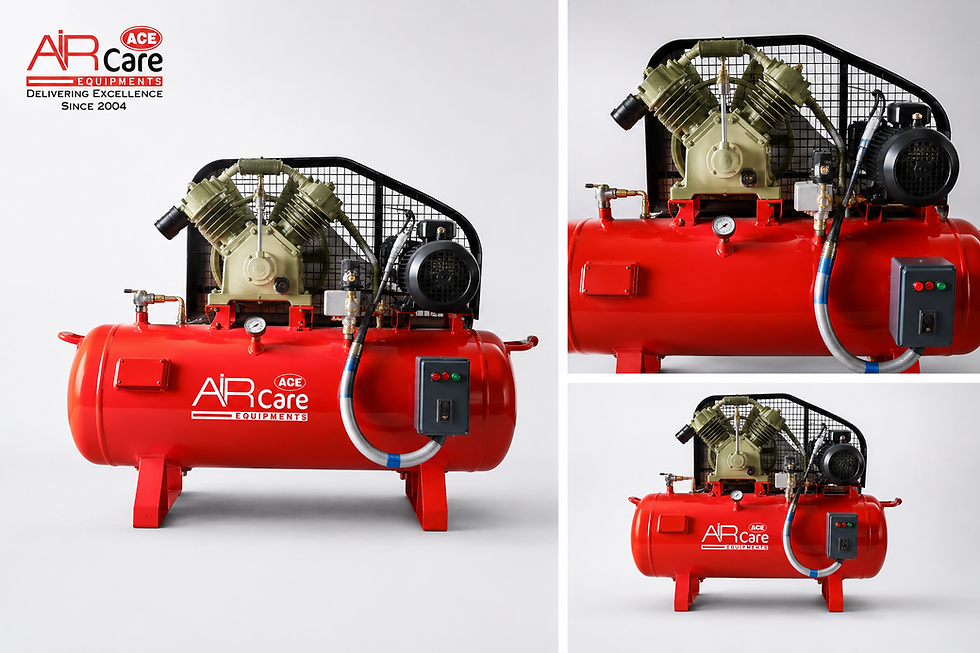
A Reciprocating Air Compressor operates using a piston-driven mechanism to compress atmospheric air. The piston moves back and forth inside a cylinder, drawing in air and compressing it to the required pressure level. Once compressed, the air is delivered to the system for immediate use or stored in an Air Receiver Tank.
This type of compressor is particularly suitable for operations with intermittent air demand, where high pressure is required at specific intervals rather than continuously.
Working Principle Explained
The working cycle of a reciprocating air compressor is straightforward yet highly effective. As the piston moves downward, air enters the cylinder through the intake valve. During the upward movement, the trapped air is compressed. When the desired pressure is reached, the compressed air is discharged into the air system or storage tank. This repetitive motion ensures a steady supply of compressed air for industrial applications.
Core Components and Their Role
A reciprocating air compressor consists of essential mechanical components that work together to ensure efficient compression. The piston and cylinder are responsible for compressing the air, while the crankshaft and connecting rod convert rotary motion into reciprocating motion. Valves regulate airflow, and the flywheel stabilises operation. A proper lubrication system minimises friction and extends the life of the compressor.
Single-Acting and Double-Acting Compressors
Single-acting reciprocating compressors compress air on one side of the piston and are commonly used for small to medium applications. Double-acting compressors compress air during both piston strokes, making them more suitable for heavy-duty industrial environments where higher air output is required.
Why Reciprocating Air Compressors Are Widely Used
Reciprocating air compressors are known for their ability to generate high pressure efficiently. Their robust design allows them to perform reliably in demanding environments. Compared to other compressor types, they are cost-effective for intermittent use and easy to maintain. Their versatility makes them suitable for multiple industries, from automotive workshops to large-scale manufacturing plants.
Role of the Air Receiver Tank
An Air Receiver Tank is an essential part of a compressed air system. It stores compressed air, stabilizes pressure fluctuations, and reduces frequent compressor start-stop cycles. By maintaining consistent air pressure during peak demand, the air receiver tank improves overall system efficiency and extends compressor life.
Oil Free Air Compressor vs Oil-Lubricated Compressor
An oil free air compressor is designed to deliver clean, contamination-free air. These compressors are ideal for industries where air purity is critical, such as food processing, pharmaceuticals, medical applications, and electronics manufacturing. They eliminate the risk of oil contamination and support compliance with strict quality standards.
Oil-lubricated compressors, on the other hand, use oil to reduce friction and enhance cooling. They are commonly used in heavy industrial applications where air purity is not a primary concern and long operating cycles are required.
Applications Across Industries
A Reciprocating Air Compressor is widely used as an Industrial Air Compressor in manufacturing units for powering pneumatic tools, assembly lines, and material handling equipment. In automotive workshops, it supports spray painting, tire inflation, and air-powered tools. In construction and fabrication, it provides reliable air supply for drilling, cutting, and heavy-duty machinery operations.
Choosing the Right Reciprocating Air Compressor
Selecting the right compressor depends on understanding your air pressure and airflow requirements. It is important to consider the duty cycle, power source, and operating environment before making a decision. Long-term factors such as energy efficiency, ease of maintenance, and availability of service support should also be evaluated to ensure maximum return on investment.
Importance of Air Compressor Service and Maintenance
Regular air compressor service is essential to maintain efficiency and prevent unexpected breakdowns. Routine inspection of filters, valves, belts, and lubrication systems helps identify potential issues early. Scheduled servicing improves performance, reduces downtime, and extends the operational life of the compressor.
Choosing Trusted Air Compressor Manufacturers In Delhi NCR
Working with experienced Air Compressor Manufacturers In Delhi NCR ensures access to high-quality equipment, expert consultation, and dependable after-sales support. A reliable manufacturer provides not only the right compressor but also guidance on installation, operation, and maintenance.
Air Care Equipments stands out by offering complete compressed air solutions tailored to industrial requirements, backed by technical expertise and prompt service support.
Why Air Care Equipments Is the Right Choice
Air Care Equipments delivers high-performance reciprocating air compressors designed for durability, efficiency, and reliability. With expertise in oil-free systems, industrial air compressors, air receiver tanks, and professional servicing, the company ensures customers receive end-to-end compressed air solutions that meet modern industry standards.
Conclusion
A Reciprocating Air Compressor remains a dependable and efficient solution for a wide range of industrial applications. By understanding your operational needs and choosing the right compressor configuration, you can achieve consistent performance and long-term cost savings.
With expert support, quality products, and reliable air compressor service from Air Care Equipments, businesses can operate with confidence, efficiency, and uninterrupted productivity.




Comments