


5 Types of Industrial Air Dryers and How to Select the Right One
- Feb 12
- 6 min read

In any compressed air system, moisture control is just as important as air generation. While an Industrial Air Compressor produces compressed air efficiently, that air often contains water vapor, oil particles, and contaminants that can damage equipment and reduce productivity. This is where a Compressed Air Dryer becomes essential.
Choosing the right drying system ensures better equipment performance, reduced maintenance costs, and longer system life. In this comprehensive guide by Air Care Equipments, we will explore five major types of industrial air dryers and explain how to select the right one for your application.
Why a Compressed Air Dryer is Important
Compressed air naturally contains moisture. When air is compressed, the concentration of water vapour increases. As the air cools, this vapour condenses into liquid water. If not removed, moisture can cause corrosion in pipelines, damage pneumatic tools, affect product quality, and increase downtime.
An efficient Air Dryer Machine removes moisture from compressed air before it reaches production equipment. It works alongside components such as the Air Receiver Tank, filters, and compressors to maintain a clean and dry air supply.
Industries such as pharmaceuticals, food processing, automotive manufacturing, electronics, and textiles rely heavily on moisture-free compressed air for smooth operations.
5 Types of Industrial Air Dryers
1. Refrigerated Compressed Air Dryer
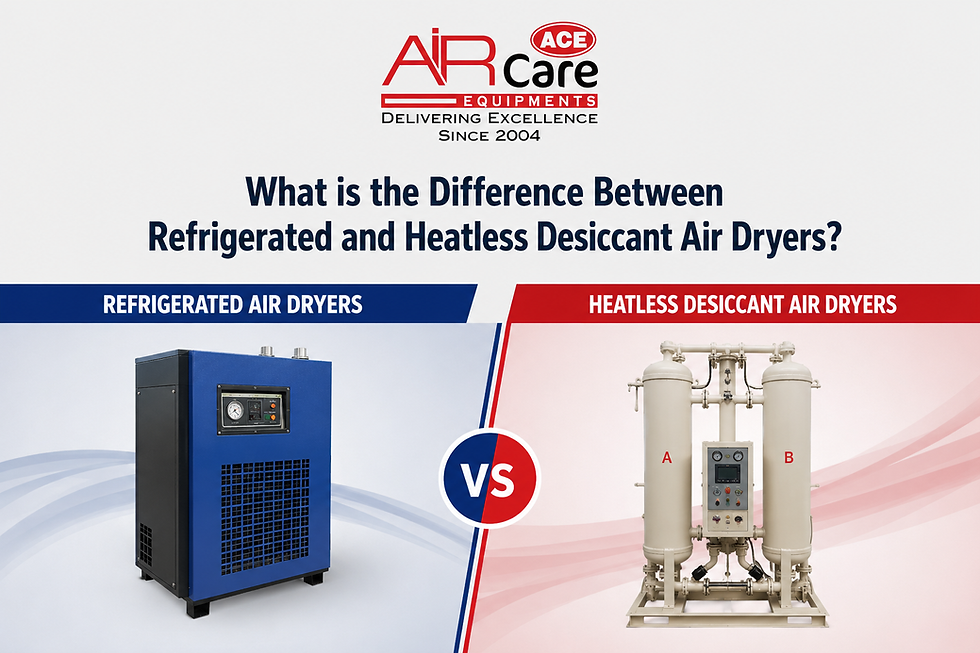
The refrigerated Compressed Air Dryer is one of the most commonly used drying solutions in industrial applications. It works by cooling compressed air to a low temperature, causing moisture to condense into water. The condensed water is then separated and drained from the system.
This type of Air Dryer Machine typically achieves a pressure dew point of around 3°C to 5°C, which is sufficient for most general industrial purposes.
Refrigerated dryers are ideal for manufacturing plants, workshops, packaging units, and automotive facilities. They are cost-effective, energy-efficient, and relatively easy to maintain. When paired with a reliable Industrial Air Compressor, refrigerated dryers offer consistent and dependable moisture control.
However, they may not be suitable for industries that require extremely dry air, such as pharmaceutical or electronics manufacturing.
2. Desiccant Compressed Air Dryer
Desiccant dryers, also known as adsorption dryers, are designed for applications requiring very low dew points. This Compressed Air Dryer uses desiccant materials such as activated alumina or silica gel to absorb moisture from compressed air.
Desiccant dryers can achieve pressure dew points as low as -40°C or even -70°C, making them suitable for highly sensitive industries. Pharmaceutical production, food packaging, and chemical processing plants often depend on this advanced Air Dryer Machine technology.
There are different types of desiccant dryers, including heatless, heated, and blower purge systems. While these systems provide superior drying performance, they typically require higher energy consumption compared to refrigerated models.
For industries where air purity is critical, investing in a desiccant dryer ensures optimal protection and reliability.
3. Heat of Compression Dryer
A Heat of Compression dryer, often referred to as an HOC dryer, utilises the heat generated during the air compression process to regenerate the desiccant material. This system is particularly effective when used with oil-free Industrial Air Compressor setups.
Because it uses the existing heat from the compressor, this type of Compressed Air Dryer is energy efficient and reduces additional heating requirements. It is commonly installed in large industrial plants where a continuous compressed air supply is required.
HOC dryers are suitable for industries with high air demand and stable operating conditions. However, they are typically integrated with specific compressor designs, which means compatibility must be considered during selection.
4. Membrane Air Dryer Machine
Membrane dryers operate using selective permeation technology. In this Air Dryer Machine, compressed air passes through special membrane fibres that separate moisture from the air stream.
Membrane dryers are compact, lightweight, and require minimal maintenance. They do not require electricity, making them suitable for remote or specialised applications.
This type of Compressed Air Dryer is often used in laboratories, medical equipment, telecommunications, and instrumentation systems where smaller air volumes are required.
Although membrane dryers are efficient for low-flow applications, they may not be suitable for large industrial operations with high air demand.
5. Deliquescent Compressed Air Dryer
Deliquescent dryers use a drying agent that absorbs moisture and dissolves into liquid form. The liquid is then drained from the system.
This simple yet effective Compressed air dryer manufacturers is often used in remote locations and outdoor environments where electricity may not be readily available. Construction sites and mining operations commonly use this system.
While deliquescent dryers are easy to install and operate, they require regular replacement of the drying material. They are typically used for applications where moderate drying is sufficient.
The Role of the Air Receiver Tank in Moisture Control
Before air reaches the dryer, it typically passes through an Air Receiver Tank. This tank plays a critical role in stabilising pressure, storing compressed air, and reducing moisture load.
As compressed air cools inside the receiver tank, some moisture naturally condenses and can be drained before entering the Air Dryer Machine. This process improves overall system efficiency and reduces the burden on the dryer.
For optimal performance, the air receiver tank and dryer must be properly sized according to the capacity of the Industrial Air Compressor.
How to Select the Right Compressed Air Dryer
Choosing the correct Compressed Air Dryer requires careful evaluation of your operational requirements. The following factors should guide your decision.
Understand Your Dew Point Requirement
Different industries require different levels of dryness. General manufacturing may operate efficiently with a refrigerated dryer, while pharmaceutical or food industries may require a desiccant system with a very low dew point.
Determine Airflow Capacity
The dryer must match the airflow capacity of your Industrial Air Compressor. Undersized dryers can lead to poor moisture removal and system inefficiency.
Consider Environmental Conditions
Ambient temperature and humidity significantly impact dryer performance. Facilities located in humid climates may require higher-capacity drying systems.
Evaluate Energy Efficiency
Energy consumption is an important factor in long-term operational costs. Some dryer technologies are more energy-efficient than others. Consulting experienced Air Compressor Manufacturers can help determine the most cost-effective solution.
Plan for Maintenance and Service
Regular Air Compressor Service and dryer maintenance ensure long-term reliability. Selecting a system with accessible service support from a trusted Air Compressor Dealer is crucial.
Why Work with Experienced Air Compressor Manufacturers
Choosing the right dryer is easier when you partner with experienced Air Compressor Manufacturers who understand industrial requirements. Professional manufacturers provide system design guidance, installation support, and ongoing maintenance services.
If you are searching for reliable Air Compressor Manufacturers In Delhi, it is important to evaluate product quality, service network, and technical expertise.
Working with an authorised Air Compressor Dealer ensures genuine parts, proper installation, and dependable after-sales support. Regular Air Compressor Service keeps your system running efficiently and minimises downtime.
Integrated Compressed Air Solutions
An efficient compressed air system includes multiple components working together seamlessly. The Industrial Air Compressor, Air Receiver Tank, filtration system, and Compressed Air Dryer must be properly integrated.
A poorly designed system can lead to excessive moisture, pressure drops, and higher energy costs. On the other hand, a well-designed system improves productivity, protects machinery, and ensures consistent output quality.
Why Choose Air Care Equipments
At Air Care Equipments, we specialise in delivering high-performance compressed air solutions tailored to diverse industrial needs. Our range includes advanced Compressed Air Dryer systems, reliable Industrial Air Compressor units, and durable air receiver tanks.
As one of the trusted Air Compressor Manufacturers In Delhi, we focus on quality engineering, energy efficiency, and customer satisfaction. Our experienced team also provides comprehensive Air Compressor Service and technical support to ensure optimal system performance.
Whether you require a refrigerated dryer for general manufacturing or a desiccant dryer for critical applications, Air Care Equipments offers customised solutions designed for long-term reliability.
Final Thoughts
Moisture control is essential for maintaining efficiency, protecting equipment, and ensuring product quality. Selecting the right Compressed Air Dryer can significantly enhance the performance of your entire compressed air system.
From refrigerated and desiccant dryers to membrane and deliquescent systems, each type serves a specific purpose. Understanding your airflow needs, dew point requirements, and environmental conditions will help you make the right choice.
Partnering with experienced Air Compressor Manufacturers and a reliable Air Compressor Dealer ensures professional guidance, quality products, and dependable Air Compressor Service. With the right expertise and equipment from Air Care Equipments, your compressed air system will deliver consistent and efficient performance for years to come.



Comments