


Piston Air Compressor: Working Principle, Types, and Industrial Applications

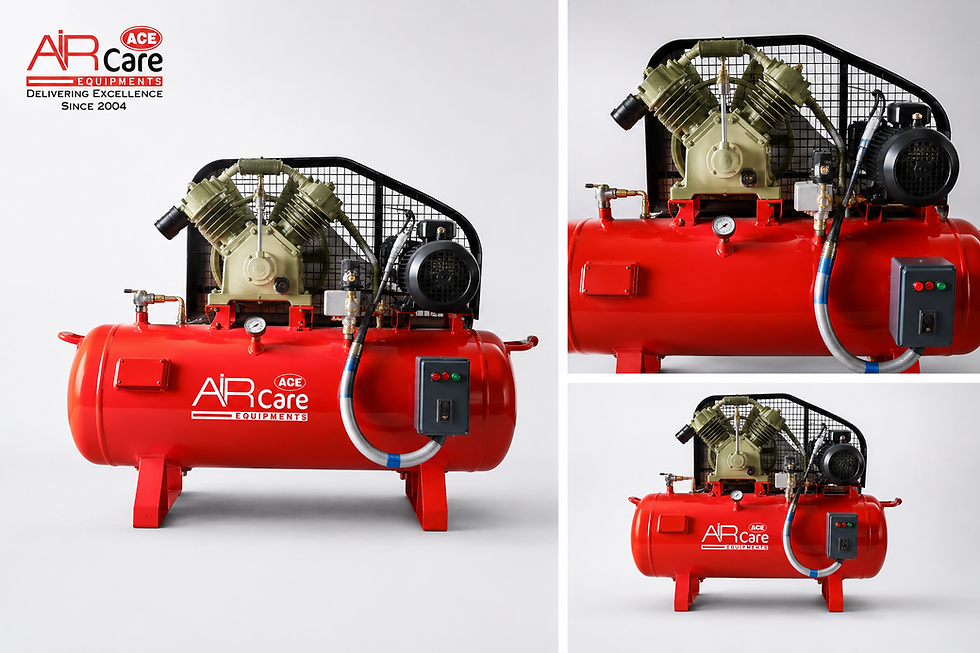
A Piston Air Compressor is one of the most reliable and widely used compressed air solutions across industries. Known for its durability, high-pressure capability, and simple working mechanism, this type of compressor continues to serve workshops, manufacturing units, automotive facilities, and process industries worldwide. Despite advancements in compressor technology, piston-based systems remain a preferred choice for applications requiring consistent and powerful air delivery.
This blog explores how piston air compressors work, their types, advantages, and how supporting equipment such as Compressed Air Dryers, servo voltage stabilizers, and Industrial Vacuum Pumps enhance overall system performance.
Understanding the Piston Air Compressor
A piston air compressor operates on the principle of positive displacement. It uses a piston moving inside a cylinder to compress atmospheric air to a higher pressure. As the piston moves downward, air is drawn into the cylinder. When it moves upward, the air is compressed and discharged into a storage tank.
This straightforward working principle makes piston compressors easy to operate, maintain, and repair, even in demanding industrial environments.
Working Principle of a Reciprocating Piston Compressor
The Reciprocating Piston Compressor functions through a repetitive back-and-forth motion of the piston, driven by a crankshaft connected to an electric motor or engine.
Intake Phase
As the piston moves downward, a vacuum is created inside the cylinder. This allows atmospheric air to enter through the intake valve.
Compression Phase
When the piston moves upward, the intake valve closes, and the trapped air is compressed inside the cylinder. The air pressure rises as the volume decreases.
Discharge Phase
Once the air reaches the desired pressure, the discharge valve opens, allowing compressed air to flow into an air receiver tank or pipeline.
This cycle repeats continuously, supplying pressurized air for various industrial applications.
Single-Stage and Multi-Stage Piston Compressors
Single-Stage Piston Air Compressor
In a single-stage design, air is compressed in one stroke and delivered directly to the storage tank. These compressors are ideal for low to moderate pressure requirements and are commonly used in garages, small workshops, and service stations.
Multi-Stage Reciprocating Piston Compressor
Multi-stage compressors compress air in two or more steps. After initial compression, the air is cooled and compressed again to achieve higher pressure. These systems are more efficient for industrial applications requiring continuous operation and higher pressure output.
Advantages of Using a Piston Air Compressor
Piston air compressors remain popular due to several advantages:
High pressure capability
Rugged and durable construction
Simple operating principle
Cost-effective for small and medium applications
Easy availability of spare parts
Their versatility makes them suitable for both intermittent and heavy-duty usage.
Importance of Air Quality in Compressed Air Systems
Compressed air often contains moisture, oil vapors, and contaminants. If not treated properly, these impurities can damage equipment, reduce efficiency, and compromise product quality. This is where air treatment accessories play a vital role.
Role of a Compressed Air Dryer
A Compressed Air Dryer is essential for removing moisture from compressed air before it reaches downstream equipment. Moisture forms naturally during compression due to temperature changes, and if left untreated, it can lead to corrosion, rust, and tool malfunction.
A well-selected compressed air dryer improves air quality, protects pneumatic components, and increases system reliability.
Refrigerated Compressed Air Dryer
A Refrigerated Compressed Air Dryer works by cooling compressed air, causing moisture to condense and separate. These dryers are widely used in industrial environments because they offer efficient moisture removal with low operating costs.
They are ideal for applications where moderate dew point control is sufficient, such as manufacturing plants and automotive workshops.
Oil Free Air Compressors for Clean Air Applications
In industries where air purity is critical, Oil Free Air Compressors are preferred. These compressors eliminate the risk of oil contamination in the compressed air stream, making them suitable for pharmaceuticals, food processing, electronics, and medical applications.
Oil-free systems ensure compliance with quality standards while reducing maintenance related to oil filtration and disposal.
Enhancing Stability with Servo Voltage Stabilizers
Electrical stability plays a major role in the performance of piston air compressors. Voltage fluctuations can lead to motor overheating, inefficiency, and premature equipment failure. Servo voltage stabilizers provide precise voltage regulation, protecting compressors and associated equipment.
By maintaining consistent voltage levels, servo stabilizers improve energy efficiency, reduce downtime, and extend the lifespan of motors and control panels.
Supporting Equipment: Air Receiver Tanks
An air receiver tank stores compressed air and acts as a buffer between the compressor and air demand. It helps regulate pressure fluctuations, reduces compressor cycling, and improves overall system efficiency.
Properly sized air receiver tanks are especially important when using reciprocating piston compressors, as they stabilize airflow during peak demand.
Integration with Industrial Vacuum Pumps
In many industrial processes, compressed air systems operate alongside Industrial Vacuum Pumps. While compressors supply pressurized air, vacuum pumps remove air to create suction for applications such as material handling, packaging, forming, and pick-and-place operations.
Using both systems together allows industries to handle a wider range of production requirements with greater efficiency and control.
Maintenance Best Practices for Piston Air Compressors
Regular maintenance ensures reliable performance and extends equipment life. Key maintenance practices include:
Inspecting piston rings and valves for wear
Cleaning or replacing air intake filters
Draining moisture from tanks and dryers
Monitoring oil levels in lubricated systems
Checking electrical connections and stabilizer output
Preventive maintenance reduces unexpected failures and improves operational efficiency.
Applications of Piston Air Compressors
Piston air compressors are used across various industries, including:
Automotive repair and service centers
Manufacturing and assembly lines
Construction and infrastructure projects
Packaging and material handling
Medical and laboratory environments
Their adaptability makes them suitable for both general-purpose and specialized applications.
Conclusion
The Piston Air Compressor remains a dependable and efficient solution for compressed air needs across industries. Its simple working principle, high-pressure capability, and durable design make it a long-term investment for businesses of all sizes.
When combined with essential accessories such as Compressed Air Dryers, Refrigerated Compressed Air Dryers, servo voltage stabilizers, and complementary systems like Oil Free Air Compressors and Industrial Vacuum Pumps, piston compressors deliver consistent performance and superior air quality.
Choosing the right configuration and maintaining it properly ensures reliable operation, reduced costs, and sustained productivity for years to come.




Comments